Fading Footsteps: The Case for Treating Senior Consultant Wind-Down as a Strategic Career Phase

Photo: U.S. Space Force photo by David Grim, Public domain, via Wikimedia Commons
The Disappearing Act Nobody Discusses
There is a particular kind of departure that leaves no fanfare, no formal announcement, and no handover document. A senior consultant begins declining new engagements. Client calls go unreturned with increasing frequency. Committee seats sit unfilled. Within eighteen months, a professional who spent three decades shaping an industry has effectively vanished from it — not through redundancy or retirement, but through a gradual, unplanned withdrawal that neither they nor their organisations were prepared to manage.
This phenomenon is becoming one of the more significant — and least examined — workforce challenges facing UK professional services. The UK Council of Commerce & Consulting has observed a marked increase in what might be termed 'soft exits': senior practitioners choosing to reduce their workload substantially without adopting any formal transition framework. The motivations are understandable. After years of demanding client work, the appeal of reclaiming personal time is entirely legitimate. Yet the manner in which this transition typically unfolds causes avoidable harm — to the individuals, to their firms, and to the professional bodies that depend on institutional memory.
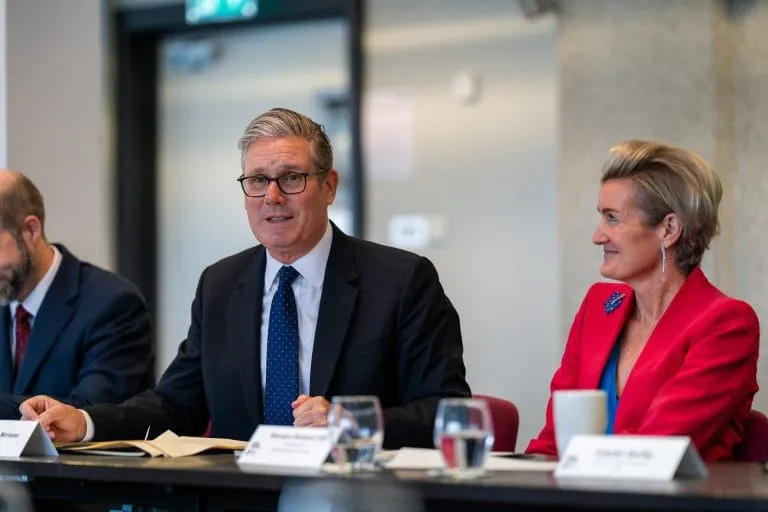 Photo: UK Council of Commerce & Consulting, via www.britishchambers.org.uk
What Is Driving the Drift
Several converging pressures are accelerating this trend. Burnout, long normalised within senior advisory roles, has become harder to dismiss following the disruption of the pandemic years. Many professionals who sustained intense workloads through a period of extraordinary uncertainty emerged on the other side with a fundamentally altered relationship to their careers. For some, the recalibration was positive and productive. For others, it translated into a quiet withdrawal from commitments they once found energising.
There is also a generational dimension worth acknowledging. Professionals now approaching their late fifties and sixties came of age in an era that offered limited vocabulary for career wind-down. The dominant narratives were binary: full engagement or retirement. Semi-retirement, portfolio reduction, and advisory emeritus roles were not culturally embedded options in the way they are beginning to be for younger cohorts. As a result, many senior consultants lack both the conceptual frameworks and the professional permission to manage their exit deliberately.
Financial considerations add further complexity. Those who have not structured their practice around pension provision or investment income may find themselves in an ambiguous position — no longer willing to sustain full-time intensity, but not yet financially comfortable enough to disengage entirely. The result is an improvised middle ground that satisfies neither professional fulfilment nor financial security.
The Organisational Cost of Unmanaged Departure
When experienced practitioners exit without structure, organisations lose far more than a name on a directory. They lose tacit knowledge: the accumulated understanding of how clients think, how markets behave, and how institutional relationships actually function beneath the surface of formal agreements. This knowledge is rarely documented, frequently undervalued, and almost impossible to reconstruct once the individual who holds it has stepped back.
Professional membership bodies are particularly vulnerable to this loss. Committees lose their most authoritative voices. Working groups stall without the institutional context that senior members provide. Mentorship pipelines — already fragile in many organisations — become thinner still. The irony is that the professionals most capable of passing on strategic wisdom are precisely those who disappear most quietly, because their seniority means there is nobody positioned to retain them.
Firms face a parallel challenge. Knowledge transfer programmes, where they exist at all, are typically designed for formal retirement rather than the graduated withdrawal that characterises the modern semi-exit. Without appropriate frameworks, client relationships migrate informally, institutional knowledge evaporates, and junior colleagues are left to reconstruct understanding that should have been handed to them deliberately.
Reframing the Final Chapter
The cultural shift required here is not merely administrative. It demands a fundamental rethinking of what a senior professional's final career phase is for. Rather than treating wind-down as the absence of full engagement, organisations and individuals alike must begin to understand it as a distinct and valuable professional stage with its own disciplines, deliverables, and strategic purpose.
For the individual practitioner, this means approaching reduced engagement with the same intentionality applied to any other career transition. A structured wind-down plan might include a defined timeline for client transition, a deliberate programme of knowledge capture — whether through mentoring, written documentation, or structured debriefs — and an explicit agreement with any professional bodies about how continued involvement might be shaped around realistic capacity. The goal is not to sustain former levels of output, but to ensure that departure is additive rather than extractive.
For professional bodies, the response must be both cultural and operational. Establishing emeritus membership tiers that provide meaningful status and community connection without demanding full participation is one practical step. Creating structured mentorship programmes that formalise the knowledge transfer role of senior members — and compensate it accordingly, whether financially or through recognition — is another. Governance frameworks should also be examined: if committee structures implicitly require full-time availability, they will systematically exclude the very professionals whose experience is most valuable.
A Call for Institutional Leadership
The UK Council of Commerce & Consulting encourages member organisations across sectors to treat the management of senior professional transitions as a strategic priority rather than an afterthought. The talent pipeline challenges facing British professional services are well documented. Less acknowledged is the degree to which those challenges are compounded by the unmanaged departure of those at the apex of accumulated expertise.
Britain's professional bodies have historically led on standards, on advocacy, and on the development of emerging talent. There is an equally compelling case for leadership on the question of how careers conclude. The professionals who built these industries deserve a framework worthy of their contribution. And the organisations that depend on their wisdom cannot afford to let it walk quietly out of the door.